
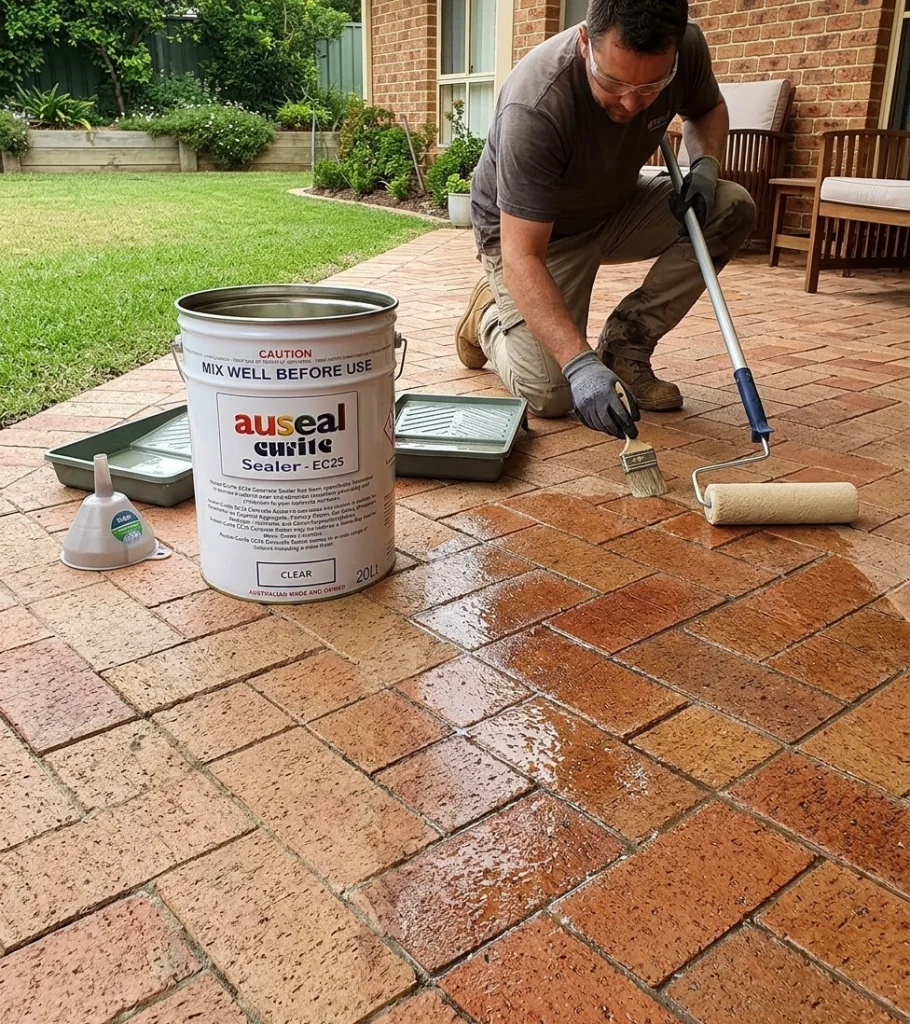
Learn what to check before choosing a breathable masonry sealer for moisture-prone brickwork, and how to ask Auseal about product suitability.
A breathable masonry sealer is generally designed to soak into porous brick and mortar instead of forming a heavy surface film, so vapour can still move through the wall. It cannot fix the cause of dampness, such as rising damp, leaking gutters, failed flashing or damaged mortar.
What Causes Moisture Problems in Brickwork?
Wall orientation and shelter from rain can also change how much moisture a wall takes on. Brickwork can become damp through wind-driven rain, poor drainage, plumbing leaks, bridged damp-proof courses or water collecting against a wall. White deposits, dark patches, crumbling mortar and recurring mould all warrant investigation before any coating is considered.
Sealing an active defect can hide the symptoms for a while as water and salts keep moving through the wall. The NSW Government publishes heritage maintenance guidance on rising damp, which is a useful starting point for understanding moisture sources.
Potential Applications for a Breathable Masonry Sealer
A penetrating treatment may suit sound, absorbent brick or masonry that needs more resistance to weather without a glossy coating. Suitability still depends on the brick type, mortar condition, previous coatings and moisture source. Dense, glazed or contaminated surfaces may not absorb a treatment evenly, and heritage masonry, crumbling mortar or salt attack may need specialist assessment.
Our range at Auseal is built around concrete sealers, coatings and decorative surfaces, and it includes a Natural Sealer. Masonry suitability and breathability should be confirmed from a product’s data sheet and safety data sheet, not assumed. Check our technical information and safety data sheets before you choose a product.
Checks Before Sealing Brickwork
Good preparation starts with diagnosis, not immediate application. Contractors and property managers should look at these factors first:
- Moisture source: Repair leaking pipes, gutters, flashings and drainage faults before treatment.
- Surface condition: Deal with loose mortar, unstable brick faces, mould and heavy salt deposits.
- Absorption: Test a small area to see whether the surface accepts the product evenly.
- Existing coatings: Identify paint or older sealers that could restrict penetration or cause patchiness.
- Weather window: Follow the technical data for surface dryness, temperature and curing conditions.
- Finish expectations: Confirm that the test area keeps the colour, texture and sheen you need.
Penetrating Protection Compared with a Surface Film
Film-forming products create a coating above the surface and may change colour depth, sheen and moisture behaviour. A breathable masonry sealer is intended to penetrate instead, reducing liquid water uptake while allowing vapour to pass.
Neither type is automatically right for every wall. The final choice should match the surface, the exposure and the appearance you want, and the product instructions and safety data sheet must guide preparation and use.
Choose a Breathable Masonry Sealer with Auseal
Moisture-prone brickwork needs a clear diagnosis, a sound surface and a compatible treatment. A test patch can show absorption, colour change and uneven application before you commit to the full area.
Send us the surface type, wall condition, previous treatments and project area through our contact page, and we can discuss whether a product from our shop suits your project.