
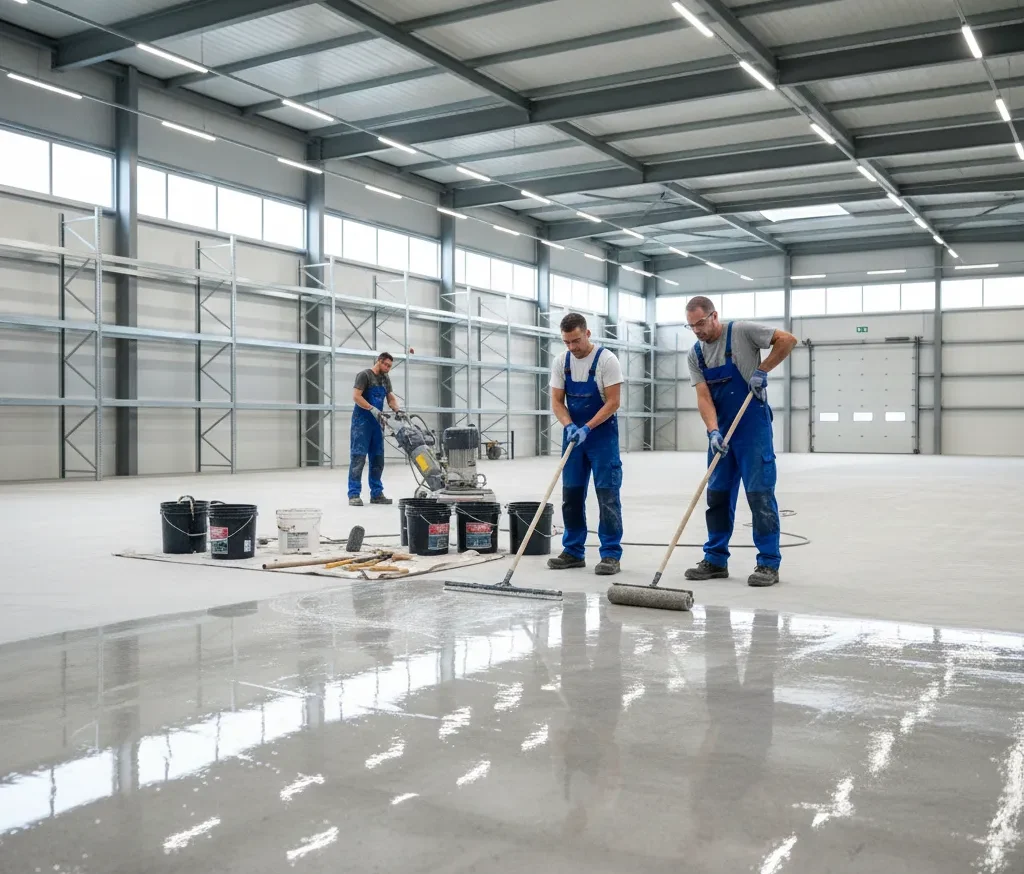
Protect warehouse flooring using concrete floor sealing systems from Auseal in Melbourne, designed to resist abrasion, chemicals, and heavy traffic.
Warehouse flooring must withstand continuous operational pressure from heavy equipment and high traffic movement. Concrete floor sealing systems protect slab surfaces by improving wear resistance and surface stability under demanding conditions. Facilities rely on sealed concrete floors to maintain safety, cleanliness, and long-term usability.
Structural and Environmental Stress on Warehouse Floors
Warehouse slabs are subjected to repeated mechanical loading from forklifts, pallet handling, and racking systems. These forces accelerate surface abrasion and create fine particulates that affect air quality and traction if untreated.
Environmental exposure further affects concrete performance through moisture transmission, chemical spills, and routine washdowns. A suitable sealing approach limits surface permeability while supporting consistent floor behaviour across daily operations.
Concrete Floor Sealing Systems and Functional Performance
Concrete floor sealing systems enhance warehouse performance by reinforcing surface density and controlling porosity. System selection depends on traffic intensity, exposure risks, and operational safety requirements.
Below are performance outcomes that define how sealed concrete floors support daily warehouse operations and surface durability.
• Surface Densification: Penetrating treatments react within the concrete matrix to increase hardness and limit surface abrasion.
• Moisture Management: Vapour-tolerant sealers accommodate internal moisture movement without causing blistering or surface breakdown.
• Chemical Protection: Sealed surfaces reduce absorption of oils, fuels, and cleaning agents commonly present in warehouse environments.
• Slip Resistance Control: Selected finishes improve traction to support safer movement of personnel and mobile equipment.
• Maintenance Efficiency: Reduced dusting and staining simplify cleaning procedures and lower ongoing surface repair needs.
Technical Considerations for Industrial Sealing Selection
Concrete floor sealing systems must be selected based on site-specific conditions and compliance expectations. Careful assessment ensures compatibility with operational demands and slab characteristics.
The following factors guide appropriate system selection to suit operational conditions and regulatory requirements:
• Traffic Load Conditions: Equipment weight, turning frequency, and travel paths influence required abrasion resistance levels.
• Concrete Surface Profile: Surface preparation quality affects sealer penetration, adhesion, and long-term performance.
• Exposure Conditions: Temperature variation and chemical contact influence curing behaviour and surface stability.
• Compliance Requirements: Slip resistance ratings must align with Australian workplace health and safety standards.
• Service Life Expectations: Sustained surface performance reduces disruption, maintenance cycles, and replacement costs.
Review the Safe Work Australia guidance on slips, trips, and falls for details on surface conditions and slip risk control in workplaces.
Long-Term Flooring Performance for Warehouse Facilities
Concrete floor sealing systems support safer operations, improved hygiene, and extended slab lifespan within warehouse facilities. Properly sealed floors maintain surface stability while reducing degradation caused by daily operational use.
At Auseal, we apply concrete sealing solutions based on how warehouse floors are actually used. Each project considers traffic levels, exposure risks, and ongoing maintenance needs.
Browse our products online to view concrete sealing options suited to warehouse environments.
Contact us to improve floor performance and protect concrete assets over the long term.
Related Blog Article: Warehouse Line-Marking That Lasts: Prep and Sealer Systems So Paint Actually Sticks